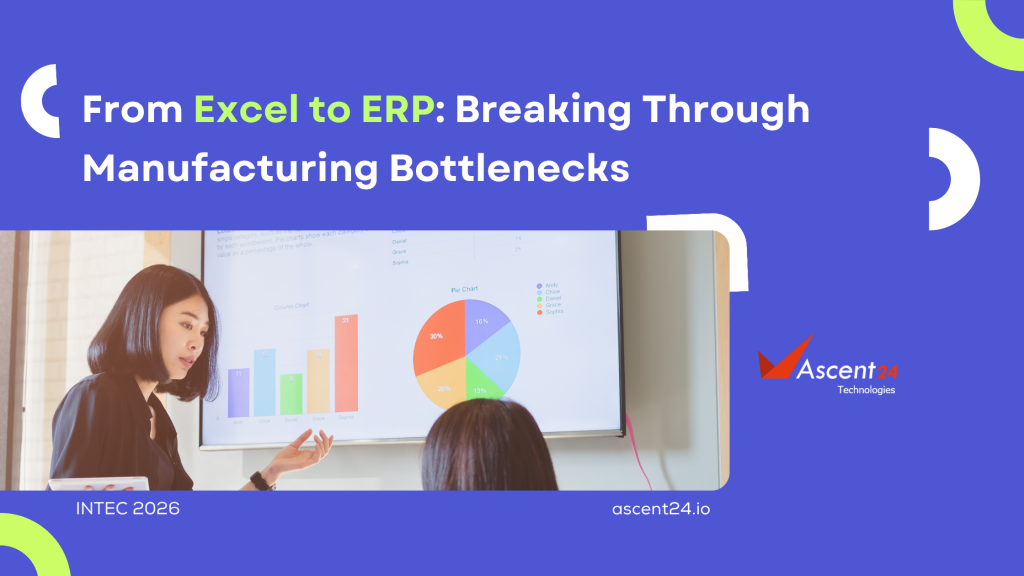
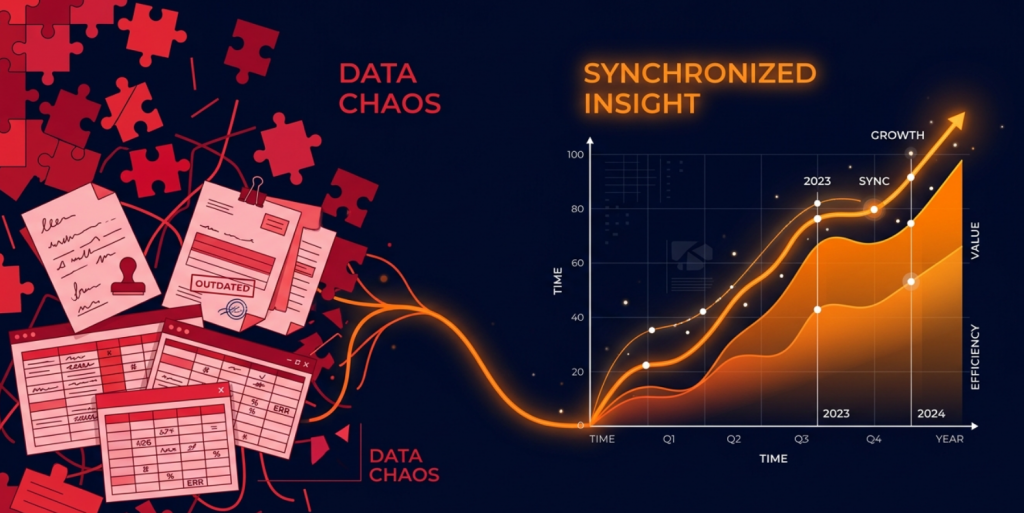
“Excel… ERP… manual papers…Ledgers…”
Over five days at Stall G161, we heard this as a response greater number of times, and the question was same to everyone.
“How do you run your business and reports now”?
This is not about technology. Not about features. Not about pricing. But all about fear, failure, and the real cost of doing nothing.
Here are the eight questions every Indian manufacturer should have honest answers to, and we’re giving them.

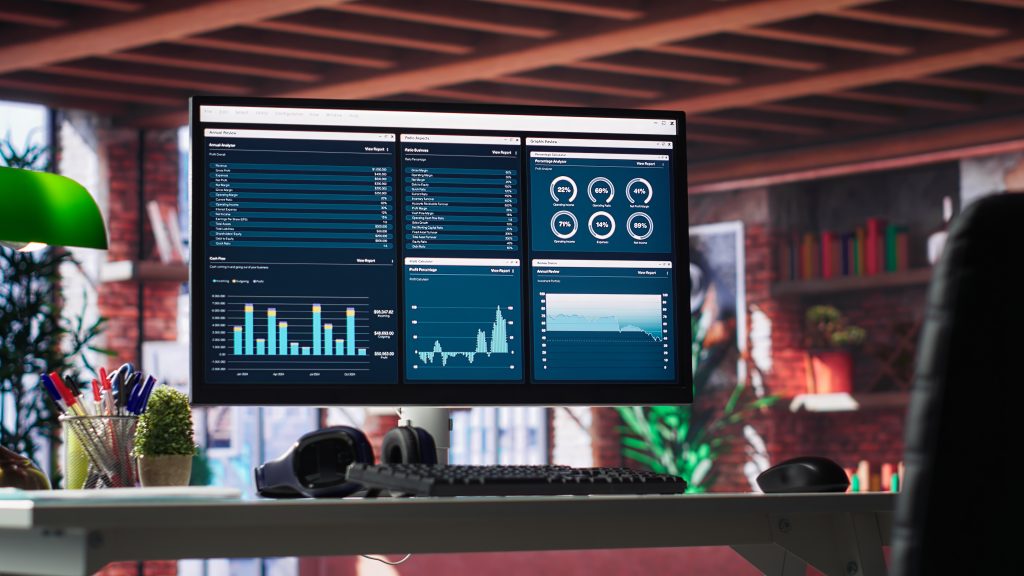
Every Indian manufacturer recognises this screen. The question INTEC 2026 answered is: how much longer can you afford to keep staring at it?
Five days. Hundreds of manufacturers. One recurring revelation: Indian factory owners are not afraid of technology. They are afraid of wasting money on technology that doesn’t fit their reality. The distinction matters enormously, because the solution to one fear is education, and the solution to the other is the right kind of software.
Here are the eight questions we heard most at INTEC 2026. Not the polished, brochure-ready questions ,the real ones, asked quietly, sometimes with visible frustration, sometimes with genuine hope. We’re answering them honestly the same way we answered them at the stall.
68%
88 %
63 M
of Indian SME manufacturers still use Excel as primary production planning tool.
of spreadsheets contain at least one significant error that impacts decisions
Indian MSMEs, the vast majority are still operating without real-time visibility
😰 Question 01 · Most Heard
“We tried ERP once. It failed. Why would this time be any different?”
This was the question that stopped the conversation at the stall more than any other. Told with a mix of bitterness and resignation, it came from manufacturers who had invested real money . Sometimes lakhs, sometimes more, in a system that their team used for three months and then quietly abandoned. The software became shelfware. The pain became a story told to justify never trying again.
Here is what we told every single one of them: the failure wasn’t yours. The failure was the software’s. Generic ERP products built for Western manufacturing workflows, sold into Indian factories with minimal customisation fail because they require your operations to adapt to the software’s logic. Custom software does the opposite. It adapts to you.
Our Honest Answer
The difference between a failed generic ERP implementation and a successful custom one is not the technology, it’s the fit. A system built around your actual workflow, your team’s habits, your GST structure, and your production patterns doesn’t need your people to change how they work. It works the way they work. That’s why adoption sticks. That’s why the previous failure wasn’t inevitable, it was a mismatch problem, not a technology problem.
💰 Question 02 · Cost & Budget
“What does this actually cost? And when will I see the ROI?”
This question arrived in different forms: “Is this for large companies only?” “Can an SME like us afford this?” “How long before I get my money back?” Every version was asking the same thing: is this investment worth it, and am I the right kind of customer for it?
❌ The Myth
Custom ERP is only for large companies.
SMEs should use off-the-shelf products and adapt their operations to fit the software.
✓ The Reality
In 2026, custom manufacturing software is deployable at SME investment levels. Most manufacturers see measurable ROI within 90 days of go-live, through reduced rework, faster stock accuracy, and eliminated reconciliation time.
Our Honest Answer
ROI on manufacturing software comes from three places that most manufacturers never quantify: time saved (a supervisor spending 10 hours/week on Excel = 500+ hours/year), errors eliminated (every inventory discrepancy, every wrong dispatch, every re-inspection has a rupee cost), and decisions improved (every business decision made on stale data has an invisible opportunity cost). Add those three up before asking “what does the software cost.”
⏱️ Question 03 · Implementation
“How long does implementation take? My team can’t afford downtime.”
The fear of disruption is one of the most powerful forces keeping Indian manufacturers locked in Excel. The mental model is binary: either you run on Excel or you shut down operations for six months to implement a new system. Neither is true, but the fear of the second option keeps many manufacturers stuck with the first.
Our Honest Answer
A phased implementation eliminates this risk entirely. You don’t flip a switch — you build a bridge. The first module goes live alongside your existing process. Your team uses both for 4–8 weeks. When confidence is established, you cut over. Then you add the next module. Most manufacturers are fully transitioned within 90–120 days with zero production disruption. The “big bang” implementation approach that causes chaos is a choice, not a requirement.
👥 Question 04 · Change Management
“My workers won’t use it. They’re used to paper and WhatsApp.”
This was one of the most honest admissions at the stall, and one of the most important conversations we had. Factory floor workers in India are not resistant to technology because they’re incapable. They’re resistant because every previous “system” they were given was harder to use than the paper it was supposed to replace, made their job more complicated, and disappeared within six months anyway. They’ve been trained to wait for the software to fail.
Our Honest Answer
The biggest hurdle is change management, and the solution is showing workers how the system reduces their burden, not adds to it. When a shop floor operator can log a production count by scanning a QR code instead of filling a paper register, they adopt it the first day. When a store keeper gets an automatic alert instead of doing a daily stock count, they love it by the end of week one. Design the system around your people’s convenience and adoption follows naturally.
📊 Question 05 · Data Migration
“We have years of data in Excel. What happens to all of it?”
This concern came from manufacturers who had built sophisticated Excel-based tracking systems over many years, custom formulas, pivot tables, macros, historical data going back a decade. The thought of abandoning that institutional knowledge was genuinely distressing. And it was a completely valid concern.
Our Honest Answer
Your Excel history doesn’t disappear. It migrates. Customer records, item masters, supplier data, historical orders, opening stock balances, all of this can be structured, cleaned, and imported into a new system during implementation. What you lose is the fragility of the spreadsheet. What you keep is every bit of the data. The transition is the moment you stop building institutional knowledge in a format only one person can maintain and start building it in a system your entire business can trust.
🔧 Question 06 · Customisation
“Our process is unique. No software will ever fit exactly how we work.”
Said by a precision components manufacturer from Hosur, a textile job-worker from Tirupur, and an automotive stamping unit from Pune, in almost identical words. Every Indian manufacturer believes often correctly that their production process has specific nuances that generic software ignores. Multi-level sub-contracting. Job card formats locked in by customer requirements. GST-specific billing structures. Shift-based wage calculations tied to job completion.
Our Honest Answer
You are right. Your process is unique. And that is precisely the argument for custom software, not against it. Custom ERP is not a product you adapt to — it’s a system built around your exact workflow, your specific production sequence, your industry’s compliance requirements, and your team’s daily habits. The uniqueness of your process is not a barrier to digitisation. It’s the specification document we build from.
🌐 Question 07 · Infrastructure
“What if the internet goes down? Our factory can’t stop for connectivity issues.”
A very Indian concern and a completely legitimate one. Power reliability and internet connectivity in many industrial areas of South India and Tier-2/3 cities are still not guaranteed. Manufacturers who’d experienced downtime from cloud-based tools were rightly sceptical about any system that depended entirely on a stable connection.
Our Honest Answer
Modern manufacturing software can be architected for offline resilience, storing transactions locally when connectivity drops and syncing automatically when it resumes. A well-designed system never stops your factory because the internet went down. This is a technical architecture decision made at the start of every implementation, not a limitation of the technology category. We design for Indian infrastructure realities, not assume Western connectivity standards.
🚀 Question 08 · The Real Question
“Where do I even start? It all feels too big.”
This was the question that came last. Sometimes after 20 minutes of conversation, sometimes after one of the other seven questions had been answered. It wasn’t really a question about software. It was an admission: I know I need to change. I don’t know how to begin. And I’m scared of getting it wrong again.
This was our favourite conversation to have at INTEC. Because the answer is genuinely simple.
Our Honest Answer
Start with your biggest pain point. Just one. Is it inventory accuracy? Start there. Is it production tracking? Start there. Is it delivery performance? Start there. You don’t need to transform everything at once. You need to solve one problem so well that your team trusts the system. Then you expand. The manufacturers who’ve done this successfully didn’t launch a company-wide ERP project. They fixed one thing, then another, then another, and eighteen months later they were running a fully connected operation without ever having experienced a single day of chaos.
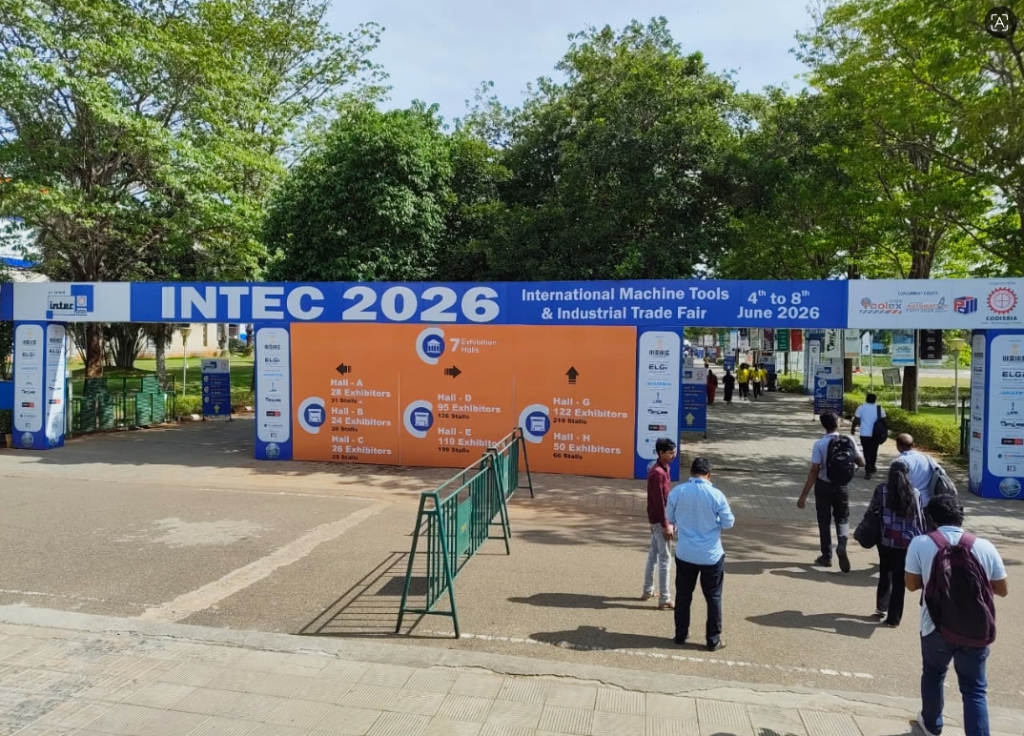
The questions manufacturers asked at INTEC 2026 weren’t about whether to digitise.
They were about how to do it without getting burned again. That’s not resistance to change.
That’s wisdom earned through experience, and it deserves honest answers, not sales pitches.
Still Have One of These Questions?
We’re Still Answering Them.
We spent five days at INTEC 2026 answering these questions for hundreds of Indian manufacturers. The event is over. The conversations don’t have to be.
Ascent24 Technologies builds custom manufacturing software for Indian businesses. ERP systems, production dashboards, inventory platforms, quality management tools, and multi-plant visibility solutions built around your exact workflow. If any of the eight questions above sound familiar, that’s your starting point. Reach out. We’ll answer the rest.