Fortune recently reported on McKinsey Global Institute research that should make every owner and operations lead pay attention: AI could automate more than half of U.S. work hours over the next decade. The same analysis points to a labor-demand reduction equivalent of about 36 million jobs, while growth could create roughly 41 million jobs. The United States could still have more jobs in 2035 than today — but the skills mix will look very different. About 11 million workers may need new occupations, and roughly 770,000 workers per year may need to change occupations — about 3.6× the historical rate. In office and administrative support, as much as ~80% of current work hours could be automated by 2035 (roles change; they do not necessarily disappear). Around 85% of growing employment is expected to require a credential or certification.
Source: Fortune coverage of McKinsey Global Institute.
The headline numbers sound like a jobs story. For small and mid-sized enterprises, they are an operations story. The question is not only how much work AI takes on — it is what your business does with the time saved.
Ready to identify processes you can automate? Ascent24 builds custom AI automation for retail, travel, and manufacturing SMEs.
Why does AI automation for SMEs change how businesses operate — not only who gets hired?
AI automation for SMEs is less about deleting headcount and more about redesigning workflows. AI agents can handle tickets, status updates, follow-ups, and routine paperwork so people focus on customers, exceptions, and growth. Firms that reinvest saved hours into service quality and new revenue scale without proportional hiring.
When automation absorbs repetitive hours, four operating changes show up quickly. First, customers get answers in minutes instead of waiting for an end-of-day email batch. Second, the same team can support more orders, SKUs, or plant lines without a matching payroll spike. Third, rules and agents apply the same process every time, which cuts avoidable errors in quotes, inventory promises, and handovers. Fourth, specialists — salespeople, planners, technicians — spend more of their day where judgment matters.
That is the operating-model shift MGI’s skills challenge implies: work hours move, credentials rise, and businesses that treat AI as a bolt-on chatbot miss the point. Automation without a plan for the freed capacity is just a quieter office. Automation with a plan becomes a competitive advantage.
How can SMEs use AI agents to reduce repetitive work and scale without proportional headcount?
Start with high-volume, rules-heavy tasks — inbox triage, order status, invoice chasing, shift handovers — then wrap them in AI agents connected to your CRM, ERP, or shop-floor systems. Measure hours saved and error rates weekly. Reinvest capacity into sales coverage, customer success, or quality, so growth does not require a matching payroll spike.
A practical sequence looks like this:
- Map the top ten repetitive tasks that burn staff time each week.
- Score each by volume, how clear the rules are, and whether the data already lives in a system with an API.
- Pilot one AI agent or automation workflow in a single team for four to six weeks.
- Integrate with existing software so you do not create a second spreadsheet of truth.
- Train people on the new exception path — humans stay in the loop for edge cases, refunds, and quality calls.
- Scale what works; shut down what does not.
If you are weighing build versus buy for the surrounding systems, see our guide on custom software vs off-the-shelf. Many SMEs already run a mix of SaaS tools; the missing piece is often the glue — custom AI software development that connects agents to the data and approvals you already trust.
What does AI automation look like in retail, manufacturing, and sales?
In retail and e-commerce, AI customer support resolves routine order and return queries; in manufacturing, automated workflows schedule checks and escalate exceptions; in sales, AI-driven follow-ups keep pipelines warm. Across all three, custom integration with your real systems turns AI demos into measurable business outcomes.
AI customer support for e-commerce and retail
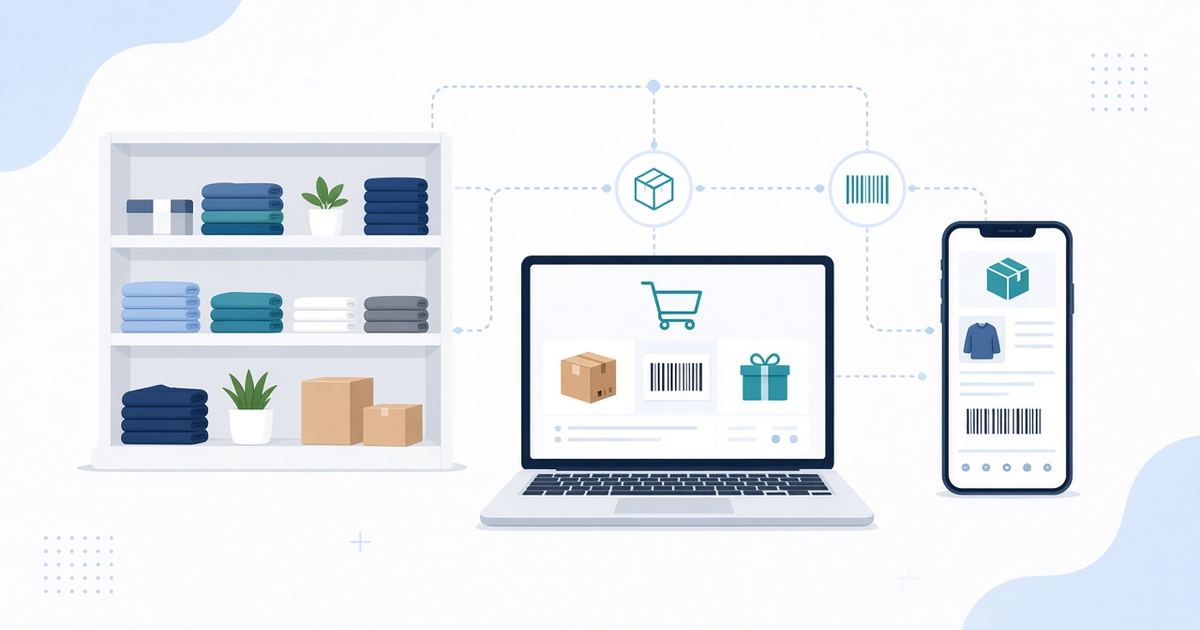
Shoppers ask the same questions every day: Where is my order? Can I change size? What is the return window? An AI support agent grounded in your order and inventory data can answer around the clock, escalate refunds or fraud to humans, and cut average handle time. When that agent is paired with solid stock truth — see our piece on omnichannel inventory — it stops promising products you cannot ship.
Automated workflows for manufacturing
Plants lose hours to paper checklists, verbal handovers, and chasing maintenance. Workflow automation and AI assistants can create work orders from triggers, remind technicians, and flag overdue preventive tasks. That pairs naturally with preventive maintenance software. The goal is fewer surprises on the line, not a robot replacing every operator overnight.
AI-driven follow-ups for sales teams
Quotes die in inboxes. AI sales follow-up agents can remind prospects, summarize call notes, and nudge reps when a deal goes quiet — always with your CRM as the source of truth. Humans still close complex deals; agents stop good leads from going cold between meetings.
| Area | Repetitive work AI can absorb | Business outcome |
|---|---|---|
| Retail / e-commerce support | Order status, FAQs, return policy | Faster replies, lower ticket backlog |
| Manufacturing operations | Task creation, reminders, escalation | Less downtime, clearer handovers |
| Sales | Follow-ups, CRM logging, meeting prep | Higher pipeline velocity |
Let's identify the processes you can automate today. Ascent24 builds custom AI automation for retail, travel, and manufacturing SMEs.
What should leaders do with the time AI saves?
Do not bank every saved hour as pure cost cut. Reinvest a share into better service, training, and new offers. MGI’s picture — more jobs overall, but different skills — rewards firms that upskill people while automation takes the rote work. The competitive edge is speed and cost-to-serve, not a thinner org chart alone.
After every automation win, ask three questions. Did we improve customer response or delivery reliability? Did we free capacity for revenue work — selling, launching SKUs, winning tenders? Did we document the new process so it survives staff turnover? Those answers turn “we installed AI” into a story your board and customers can feel.
Why Ascent24 for AI automation and custom AI software development in India?
Ascent24 Technologies is a custom software development company in India. We build web and mobile apps, cloud and SaaS platforms, ERP integrations, and AI/ML solutions — including NLP, computer vision, and deep learning — for retail and e-commerce, travel, and manufacturing and distribution.
We help SMEs design AI agents and business process automation that connect to the systems you already run; ship practical AI customer support, manufacturing workflows, and sales follow-up rather than slideware; and combine automation with the custom applications and cloud platforms growth requires. Talk to us at info@ascent24.io, +91 96558 70024, or www.ascent24.io.
The biggest risk is waiting
The biggest risk isn't adopting AI and failing. It's waiting until your competitors use AI to serve customers faster and operate at lower costs.
Let's identify the processes you can automate today.
Let's identify the processes you can automate today. Talk to Ascent24 at info@ascent24.io or +91 96558 70024.
FAQ
What is AI automation for SMEs?
AI automation for SMEs means using AI agents and workflow automation to handle repetitive business tasks — support tickets, status updates, follow-ups, scheduling — so small and mid-sized companies improve productivity and scale without matching every growth step with new headcount.
Will AI replace all office and admin jobs?
According to McKinsey Global Institute research reported by Fortune, ~80% of current office/admin work hours could be automated by 2035. That means roles change and tasks shift; it does not mean every job disappears overnight. Businesses still need people for exceptions, relationships, and decisions.
Where should a small business start with AI agents?
Start with one high-volume, rules-based process that already has clean data in a CRM, ERP, or helpdesk. Pilot for a few weeks, measure hours saved and error rates, then expand. Avoid boiling the ocean with a company-wide AI program on day one.
How is custom AI software different from a generic chatbot?
Generic chatbots answer from generic knowledge. Custom AI software development ties agents to your products, inventory, pricing rules, and plant or store data, with security and audit trails suited to your industry — retail, travel, or manufacturing.
How does Ascent24 help with business process automation?
Ascent24 designs and builds web/mobile apps, cloud/SaaS, ERP links, and AI/ML features so automation sits inside real workflows. You get implementation partners focused on outcomes — faster support, smoother manufacturing workflows, tighter sales follow-up — with contact via info@ascent24.io or +91 96558 70024.
What did the Fortune / McKinsey report say about jobs and skills?
MGI’s analysis (via Fortune) finds AI could automate more than half of U.S. work hours over the next decade, with ~36 million jobs’ worth of demand reduced and ~41 million created by growth, ~11 million workers needing new occupations, ~770,000 occupational changes per year (~3.6× historical), and ~85% of growing employment needing credentials. The harder challenge is skills, not only automation volume.