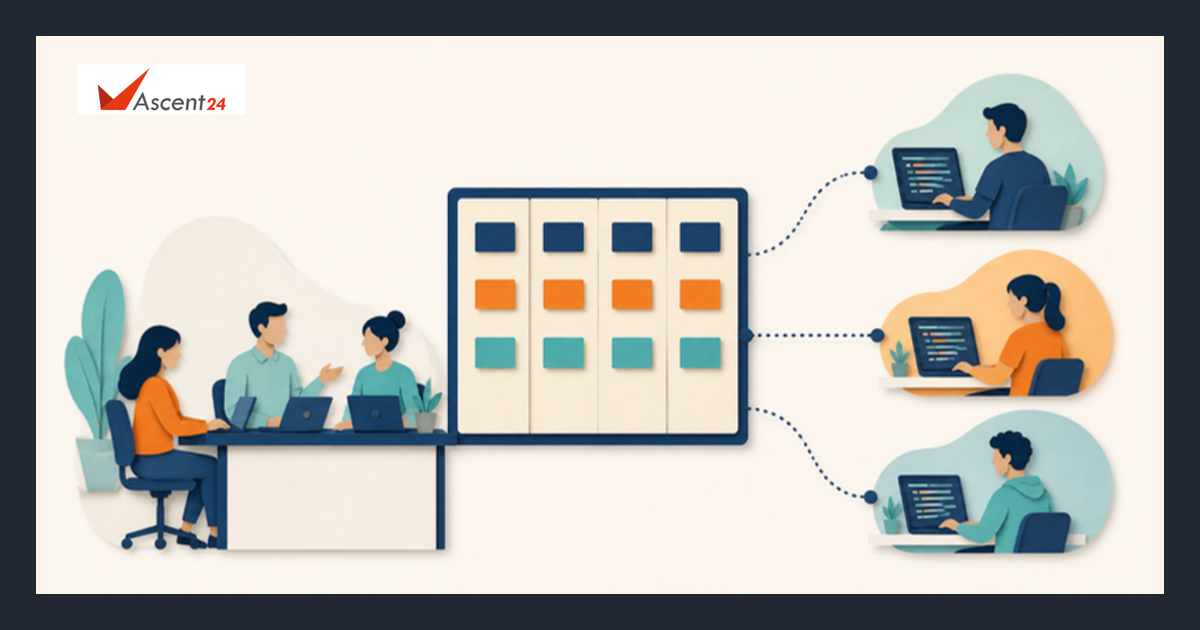
This plan is for SMBs in the US, UAE and Singapore that bring in a remote or dedicated developer for an existing product. It is not legal advice, and it is not a substitute for the contract work covered in our earlier checklist. It is a day-by-day way to turn what lives in people's heads into something a new teammate can use.
Before day one: access and accounts
Do this the day before they start, not on the morning they join.
- Create their email, chat, and project tool accounts (for example Slack or Teams, Jira or Linear, GitHub or GitLab, and any cloud consoles they will need).
- Add them to the right repos with the least access that still lets them work, and invite them to the staging and review environments.
- Confirm VPN, SSO, and 2FA work with a test login, or with a short call if your tools need a human to approve the first sign-in.
- Name one internal owner for questions. That person answers within a set window (same day is enough for most SMBs).
- Share meeting links for the kickoff and for a short mid-week check-in.
If access is not ready on day one, the developer spends the day waiting. That is expensive and avoidable.
The context pack (send it before they start)
Keep it short. A single doc or a small folder is better than a long wiki nobody maintains. Aim for something they can read in under an hour.
- Goals for the next 30 days. What success looks like in plain language (for example "ship the new checkout step on staging" or "cut the weekly report build from two hours to twenty minutes").
- Architecture sketch. One page on the main services, where the code lives, how environments are named, and which databases or queues matter for day-to-day work.
- How to run it locally. Clone, install, env vars, seed data, and the one command that starts the app. Note the known sharp edges (for example "tests need Redis on port 6380").
- Who decides what. Product owner, tech lead, and who can approve merges, deploys, and scope changes.
- Coding and review rules. Branch naming, PR size preference, required checks, and how you treat AI-assisted code if your team has a rule for that.
- Where the truth lives. Links to the ticket board, design files, API docs, and the runbook. Say which source wins when two docs disagree.
You will not capture everything. That is fine. The goal is to cut the number of times they have to ask "where does this live?" on day one.
Day one: kickoff and setup
Keep the kickoff to about 45 minutes.
- Walk through the context pack and the 30-day goals.
- Confirm local setup works, or unblock it live.
- Introduce the people they will talk to most, and the channel for urgent issues.
- Assign the first ticket (see day two and three) and show where to put questions in writing so answers stay searchable.
Avoid a full-day orientation with no coding. The developer should leave day one able to open the repo, run the app, and see the first ticket.
Days two and three: ship one small ticket
Pick a ticket that is real but bounded:
- Touches one area of the codebase
- Has a clear definition of done
- Does not depend on unfinished design or unknown access
- Can be reviewed by one person without a long debate
Examples: fix a known bug with a clear repro, add a missing validation, improve a log line that slows support, or write a small admin script your team already wanted.
By the end of day three they should have opened a pull request. The point is not the size of the change. It is proving that your path from ticket to review works for someone new.
Code review rules that help a new remote developer
Write these down and stick to them in week one.
- Respond within one business day on their first few PRs, even if the answer is "looks good, one small note."
- Prefer comments on the code over private chat, so the next developer learns from the same thread.
- Separate style nits from blockers. Ask for a follow-up ticket for nice-to-haves so the first merge is not delayed by taste.
- Explain the "why" when you reject an approach. Context that lives only in the reviewer's head is exactly what the survey flagged.
- Merge something in week one. An empty main branch for a new hire is a bad signal, even if the work is still small.
Day four: widen the map
Once one ticket is in review or merged:
- Give them a second ticket in a nearby area of the codebase, still small.
- Walk through how you deploy to staging and how you watch for errors.
- Share the support or incident channel so they see how production issues are handled.
- Ask them to add one short note to the context pack about anything that was missing or wrong. That keeps the pack alive.
Day five: check-in
Hold a 30-minute check-in with the internal owner and, if useful, the product owner.
Cover:
- What blocked them, and what you will fix before week two
- Whether access, docs, and review speed felt workable
- What they will own next week (one clear outcome, not a vague backlog)
- Whether the engagement model still fits (hours, timezone overlap, and who they escalate to)
Write down the answers. Week two should start from that list, not from another blank kickoff.
A simple week one checklist
Before day one
- Accounts, repos, and staging access ready
- Context pack sent
- Named owner for questions
- First ticket written with a clear definition of done
By day three
- Local environment runs
- First PR opened
- At least one written review comment or approval
By day five
- First change merged or clearly scheduled to merge
- Check-in notes shared
- Week two outcome agreed
Where Ascent24 can help
Ascent24 places dedicated and outsourced developers with SMB teams, and we treat week one as part of the delivery, not an afterthought. If you want help scoping a dedicated developer or a small team, including a clear first-week plan, contact us at info@ascent24.io. For what should already be in the contract before anyone starts, see our guide on what to put in a software development contract before you outsource. For how to choose between staff augmentation, a dedicated team and project outsourcing, see our comparison of those models.
FAQs
How long should onboarding take for an outsourced developer?
Plan for a full working week before you expect independent delivery on larger tickets. Many teams see a first small pull request by day three when access and a context pack are ready before day one.
What should go in a developer context pack?
Goals for the next 30 days, a short architecture sketch, how to run the app locally, who decides what, coding and review rules, and links to the systems of record. Keep it short enough to read in under an hour.
Why does incomplete information slow remote developers so much?
They cannot overhear hallway answers. Stack Overflow's 2026 survey shows incomplete information as a top barrier to work context (63.2%), with context in people's heads close behind (60.9%), and teammates as the most common source of work answers (71.9%). Writing the basics down replaces a long chain of chat questions.
Should the first ticket be easy?
It should be small and clear, not pointless. A real bug or a thin feature that teaches the path from ticket to merge is better than a throwaway exercise.
Who should own onboarding on the client side?
One named person with time to answer questions the same day. Spreading ownership across "whoever is free" is how week one turns into week three.
Sources
- Stack Overflow Developer Survey 2026, Barriers to finding context (Information is incomplete 63.2%; Important context lives in people's heads 60.9%): https://survey.stackoverflow.co/2026/knowledge/data/context-problems
- Stack Overflow Developer Survey 2026, Sources for work-related answers (Coworkers or teammates 71.9%): https://survey.stackoverflow.co/2026/knowledge/data/knowledge-q
- Stack Overflow Developer Survey 2026 overview: https://survey.stackoverflow.co/2026/