What changed this festive season
Recent reports show the pressure:
- Brands are borrowing more to stock up. Consumer brands are borrowing roughly 15 to 20% more than last year this festive season, according to executives quoted by Mint (19 October 2026). The money is going into inventory, marketing and faster replenishment across channels.
- Lenders see it too. MSME lender Indifi told The Economic Times (8 October 2026) that its disbursements to quick-commerce-focused sellers are up about 50%, and that in some categories quick commerce drives about 25 to 30% of a typical borrower's business.
- Fast delivery is spreading beyond groceries. BusinessLine (16 October 2026) reports that Flipkart Minutes will offer 77,000+ products and Myntra's M-Now 1.5 lakh styles on rapid delivery.
Why quick commerce ties up more cash
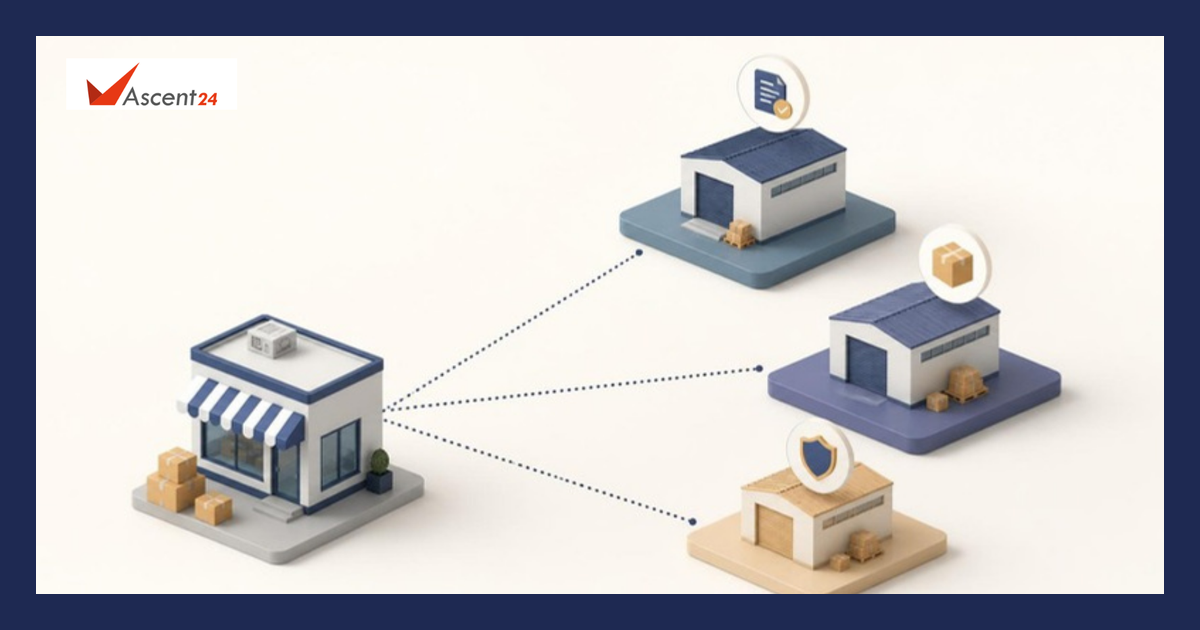
In a traditional setup, one central warehouse feeds every order. In quick commerce, stock in your central warehouse does not help if the dark store serving the customer has run out. As a Fraganote co-founder told Mint, "quick commerce has turned availability into the product."
Three things follow:
- More locations means more stock in total. Each location needs its own buffer.
- Faster turnover only partly offsets it. Smoor told Mint its working-capital need rose only modestly because stock moves faster.
- Cash comes back at different speeds. Quick commerce, marketplaces and offline retail all have different stocking needs, settlement timelines and credit cycles. Fast sales do not always mean fast cash.
A practical inventory plan for the next four weeks
- Get one stock view per SKU, per channel and location. For each SKU, you need on-hand stock, stock in transit and units sold in the last seven days. Show this for each quick-commerce platform, marketplace and your own store. If this lives in five seller portals, you are planning from memory.
- Split your catalogue into proven sellers and new festive items. Back proven sellers with confidence. Send smaller first lots of new gift sets and reorder only what sells. Fraganote described this approach to Mint.
- Set a reorder point for each location. A common rule of thumb is: average daily sales × replenishment lead time in days + safety stock. Review it weekly, and daily during peak weeks, because festive demand changes fast.
- Track cash tied up per channel. Add stock value held at each channel to money awaiting settlement from it. This tells you where your working capital actually sits before you borrow more.
- Plan the exit for slow movers now. Decide which channel will take leftover festive stock after the season, so it does not sit in dark stores where it is unlikely to sell.
Common mistakes to avoid
- Treating a whole platform as one location when stock is actually spread across many stores.
- Committing to large quantities of untested festive SKUs before early sales data arrives.
- Borrowing against expected sales without checking each channel's settlement timeline.
Where software helps, and where it does not
Software cannot predict festive demand perfectly or rescue a weak product. It can bring stock, sales and purchase data into one place so you decide reorders daily, not weekly.
An inventory system with multi-warehouse support can treat each channel or dark-store cluster as its own location. BestERP lists centralised inventory, procurement, multi-warehouse management and low-stock alerts on its website. How much data you can pull automatically from each quick-commerce seller portal depends on what that platform provides, so check this before you assume a live sync.
Related guides: omnichannel inventory for retail, cutting RTO and COD returns and GST Rule 14B for sellers using platform warehouses.
FAQs
What is quick commerce inventory planning?
It is deciding how much of each product to keep at each dark store or platform location, and when to replenish it, so items stay available without too much cash stuck in slow stock.
How much stock should I send to quick-commerce platforms before Diwali?
There is no single right number. Base it on last season's sales for that SKU, current sell-through, and how long replenishment takes. Start smaller for new products and reorder quickly when they sell.
Do I need an ERP for this?
Not always. A small catalogue on one or two channels can work with a well-maintained sheet. Once you manage many SKUs across several platforms and locations, a system that keeps stock data in one place saves time and reduces stock-outs.
Need one view of stock across your channels?
If your stock and sales data sit in separate portals and spreadsheets, Ascent24 can help you plan a single inventory view that fits how you sell. Message us on WhatsApp at +91 96558 70024, call +91 96558 70024, or email info@ascent24.io.