
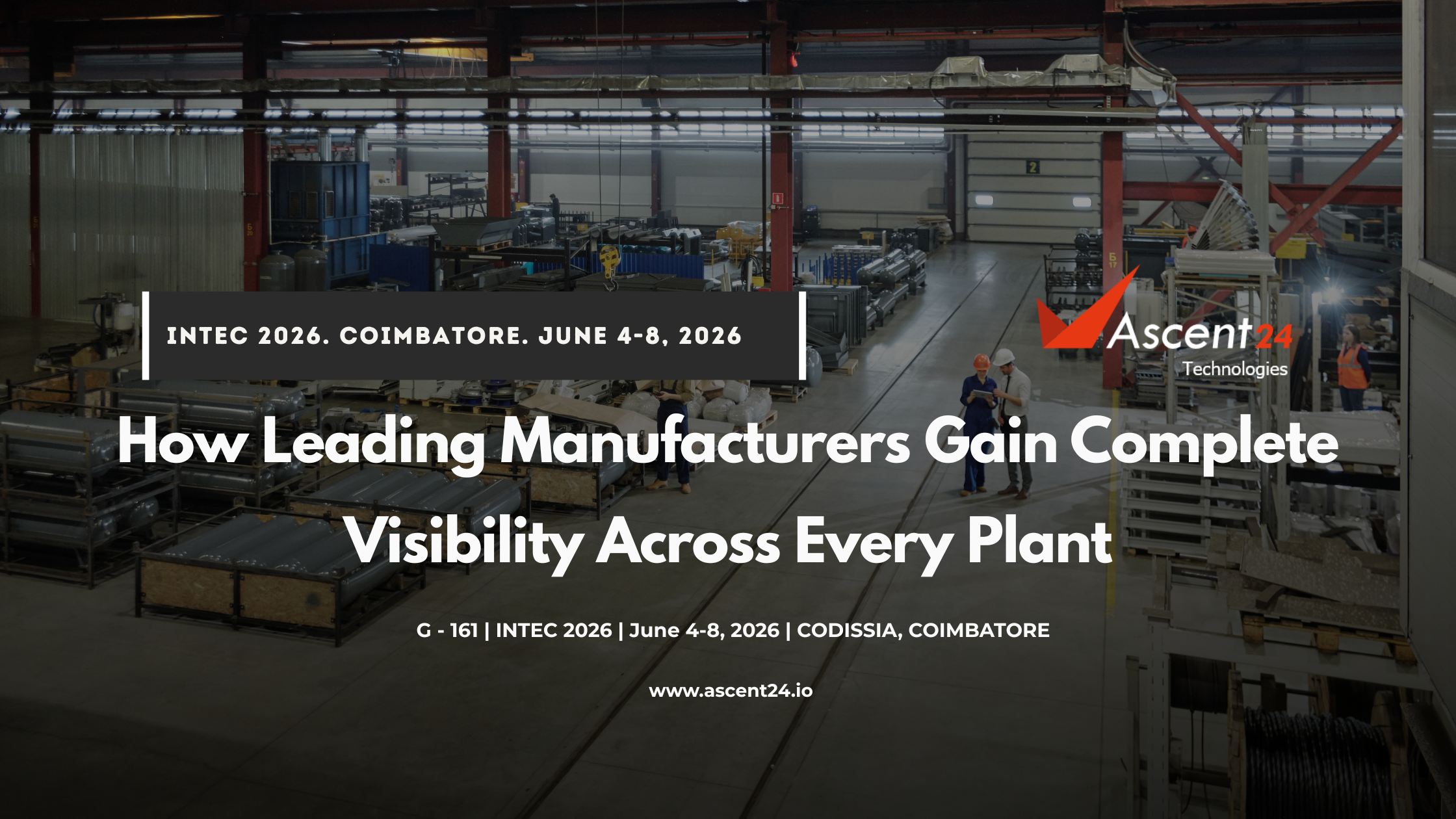
How Leading Manufacturers Gain Complete Visibility Across Every Plant
“Your Pune plant is running overtime. Your Chennai unit is sitting idle. Your Coimbatore facility just had a quality rejection. And you found out about all three, at the Monday morning meeting.” Here’s how India’s best manufacturers are fixing that.
“The problem isn’t that Indian manufacturers can’t build great products at multiple locations. The problem is that they can’t see what’s happening at all of them, at the same time, without making phone calls.”
Picture this: You’re the owner of a mid-sized Indian manufacturing company. Ten years ago, you had one plant in Coimbatore. Five years ago, you opened a second unit in Hosur to serve Chennai’s auto corridor. Last year, you added a third facility in Pune to be closer to western market customers. You have done everything right. You have scaled, diversified, and built manufacturing muscle across India. But here is the uncomfortable truth. Your ability to see what is happening across all three plants has not kept up with your growth.
At 9 AM on a Monday, you sit in your Coimbatore office and ask a simple question: how did all three plants perform last week? The answer comes in three separate Excel files, two WhatsApp forwards, and a verbal update from your operations head who visited Pune last Thursday. By the time you piece together the picture, it’s noon, and the picture is already five days old.
This is the multi-plant visibility problem, and it is one of the most common and most costly operational challenges facing Indian manufacturing CEOs in 2026. It does not affect only large conglomerates. It hits every manufacturer who has grown beyond a single location, whether that means two plants in Tamil Nadu or five units across four states.

The Real Cost of Flying Blind Across Multiple Plants
Before we talk about solutions, let us be honest about the problem. Most Indian multi-plant manufacturers are operating with a dangerous information lag. The gap between when something goes wrong on the shop floor and when the CEO finds out about it is measured in hours or days, not minutes. And in manufacturing, that gap has a direct rupee cost.
No Single Source of Truth
Plant A reports production in one Excel format. Plant B uses a different template. Plant C’s supervisor WhatsApps photos of the production register. None of these speak to each other, and consolidating them manually eats 4–8 hours of management time every week.
Always Looking at Yesterday
By the time consolidated reports reach the CEO’s desk, the data is 24–72 hours old. Decisions made on stale data aren’t informed decisions, they’re delayed reactions. In a multi-plant operation, every delayed reaction compounds across locations.
Unbalanced Capacity, Invisible to Leadership
When one plant is overloaded and another has idle capacity, the CEO should be able to rebalance within hours. Without real-time cross-plant visibility, this imbalance can persist for weeks, costing overtime at one plant and idle wages at another simultaneously.
Inventory Trapped Between Plants
Raw materials overstocked at Hosur while Pune is waiting on the same items. Finished goods piling up in Chennai while customer orders in Rajasthan go unfulfilled. Without a unified inventory view, inter-plant stock imbalances are invisible until they cause a crisis.
A D&B manufacturing survey found that around a quarter of manufacturing firms monitor only direct suppliers, and poor visibility is causing measurable issues in quality control, increased costs, and delivery delays. For multi-plant Indian manufacturers, the same visibility gap exists internally, between headquarters and plant floors, with equally damaging consequences.
How India’s Most Successful Multi-Plant Manufacturers Do It
India’s largest manufacturers have solved this problem, and the lessons from their approach are directly applicable to growing mid-sized companies, not just conglomerates. Here is how they think about multi-plant visibility.
Tata Motors
Operates plants across Jamshedpur, Pune (Chinchwad & Pimpri), Sanand, and Uttarakhand, unified under integrated ERP systems that give leadership real-time production, quality, and inventory visibility across all sites simultaneously.
TVS Motor Company
Four manufacturing facilities across India and Indonesia, coordinated through centralised production intelligence systems that allow capacity balancing and supply chain decisions to be made from a single command view.
Mahindra & Mahindra
Multiple automotive and tractor plants across Maharashtra, Telangana, and Tamil Nadu connected through integrated operational platforms, enabling consistent quality standards, cross-plant benchmarking, and unified reporting.
Ashok Leyland
Commercial vehicle plants spanning Tamil Nadu, UP, Uttarakhand, and Himachal Pradesh, managed through centralised manufacturing intelligence that allows the HQ in Chennai to monitor every plant’s KPIs in real time.
Bajaj Auto
Pune-headquartered manufacturer with Chakan, Waluj, and Pantnagar facilities coordinated through connected ERP systems, achieving consistent quality metrics and production efficiency benchmarks across all locations.
Growing Indian MSMEs
The fastest-growing mid-sized Indian manufacturers, particularly in Coimbatore, Hosur, and Chennai, are now adopting the same multi-plant visibility approach at SME-friendly investment levels through custom software platforms.
What all of these companies share is a fundamental strategic decision: they chose to build a connected operational nervous system across all their plants, rather than letting each facility operate as an information island. The good news is that in 2026, the technology to do this is no longer the exclusive domain of large enterprises. It is accessible to any manufacturer willing to invest in it.
The 6 Pillars of Multi-Plant Visibility for Indian Manufacturers
Here is how forward-thinking Indian CEOs are solving the visibility problem. Systematically and Practically:

The single biggest change an Indian multi-plant manufacturer can make is moving from location-specific systems, separate spreadsheets, separate accounting software, separate production trackers at each plant to a single unified ERP platform that every facility feeds into in real time.
This does not mean every plant runs identically. It means all plants speak the same data language, report to the same system, and contribute to one consolidated operational picture that the CEO and leadership team can access from anywhere.
A Coimbatore-based pump manufacturer with units in Coimbatore, Hosur, and Ahmedabad recently implemented a unified production management system across all three sites. The CEO who previously flew to each plant monthly now reviews consolidated production, quality, and dispatch performance for all three locations every morning on a single screen. The monthly site visit is now a quarterly one.
CEO Action: The question to ask your IT or operations team today is: “Can I see the production output of all our plants on one screen, right now?” If the answer is no or involves pulling multiple reports, that is your starting point.

A daily production report is a historical document. By the time your plant manager compiles it, emails it, and you read it, the problems it describes have already had 8–24 hours to compound. Real-time production dashboards replace reports with live intelligence.
For a multi-plant Indian manufacturer, this means a single dashboard view that shows right now, not this evening, how each plant is performing against today’s production target, what the current machine status is at each facility, and where the bottlenecks are building.
India’s manufacturing growth hit 8.1% in December 2025, the highest in over two years, led by electronics and automotive. For Indian manufacturers scaling fast in these sectors, the ability to see live production data across all plants is no longer a competitive advantage. It is a competitive requirement. Real-time visibility is what allows you to respond to demand surges and supply disruptions at the speed the market now demands.
Manufacturing SMEs that integrate live operational data across plants report reducing downtime by 18% and improving OEE by 12–15 percentage points within the first 90 days, because problems get spotted and escalated in minutes, not days.
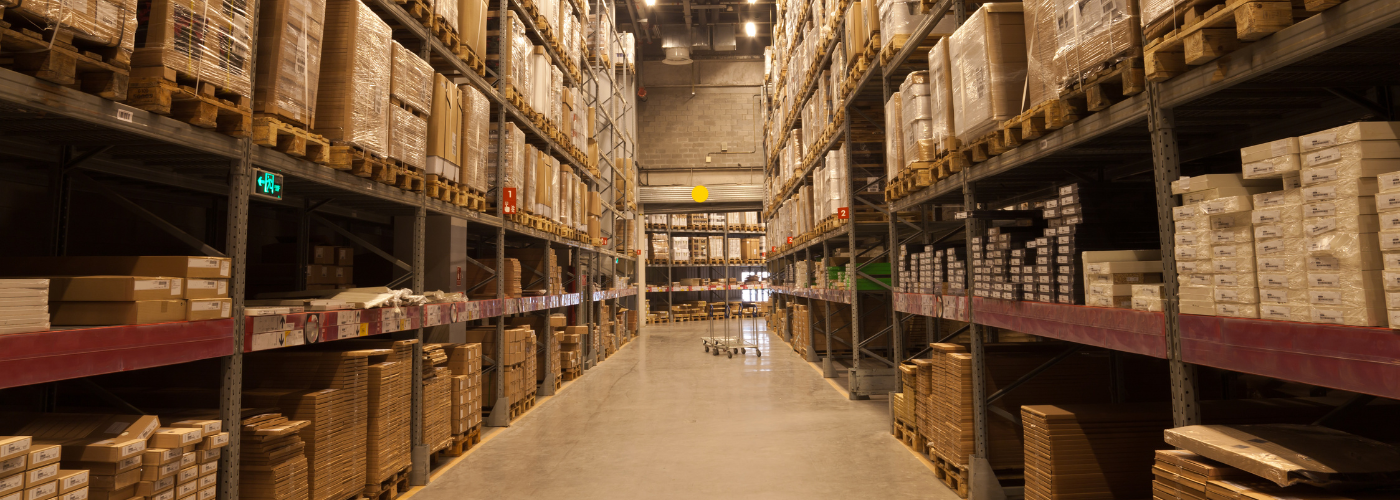
For a multi-plant Indian manufacturer, inventory is not just at one location. Raw materials sit at Plant A. Work-in-progress moves between Plant B and Plant C. Finished goods are distributed across three regional warehouses. Without a unified inventory system, this stock is effectively invisible to leadership, and the result is simultaneous overstocking and stockouts across different locations.
Unified inventory visibility means one system tracks every unit of raw material, WIP, and finished goods across every location, with alerts for low stock, excess stock, and inter-plant transfer requirements triggered automatically.
In India’s volatile raw material environment where steel, copper, and polymer prices fluctuate monthly, a multi-plant manufacturer without unified inventory visibility is essentially procuring blind. One plant over-buys copper wire while another is waiting on the same material for a rush order. A unified inventory system would have flagged the inter-plant transfer opportunity before the emergency purchase order was raised.

Quality in a multi-plant operation is more than each plant meeting its own standards. It is about maintaining consistent quality across all locations, so that a component made in your Hosur plant meets the same specification as one made in your Pune facility, and your customers receive identical quality regardless of which plant fulfilled their order.
Cross-plant quality visibility means tracking rejection rates, rework percentages, customer complaint rates, and inspection pass rates across all plants simultaneously, and making that data visible to leadership in a single view. When Plant B’s rejection rate is 2% and Plant C’s is 8%, that gap should be visible to the CEO. Not buried in separate plant reports.
For Indian manufacturers supplying Tier-1 automotive OEMs in Chennai’s corridor, Hyundai, Ford, BMW, Renault-Nissan supply chains, quality consistency across plants is an absolute requirement. A supplier with three plants delivering inconsistent quality across sites risks losing the entire account, not just the affected plant’s allocation. A unified QMS with cross-plant benchmarking is what prevents that outcome.
CEO Action: Ask for a side-by-side comparison of rejection rates and customer complaint incidents across all your plants for the last 90 days. If your team cannot produce that in under 30 minutes, your quality visibility infrastructure needs attention.
This is one of the most underappreciated challenges in Indian multi-plant manufacturing. When you have plants in Tamil Nadu, Maharashtra, and Rajasthan, you are operating under three different state labour laws, three different Factory Act compliance frameworks, and potentially different minimum wage structures. Managing this manually, plant by plant, is one of the highest compliance risk areas for Indian manufacturing businesses.
A unified workforce management system, one that tracks attendance, shift schedules, overtime, contract labour, and compliance requirements across all plants, gives the CEO a single view of workforce deployment across locations and flags compliance risks before they become legal issues.
India’s regulatory landscape for manufacturing is complex and multi-layered across Central, State, and Local levels. Multi-state manufacturers face overlapping jurisdiction challenges in areas from pollution control to factory inspectorate compliance. A unified workforce and compliance management system that adapts to each state’s requirements — without separate manual tracking is a significant risk reduction and management efficiency gain for Indian multi-plant operators.
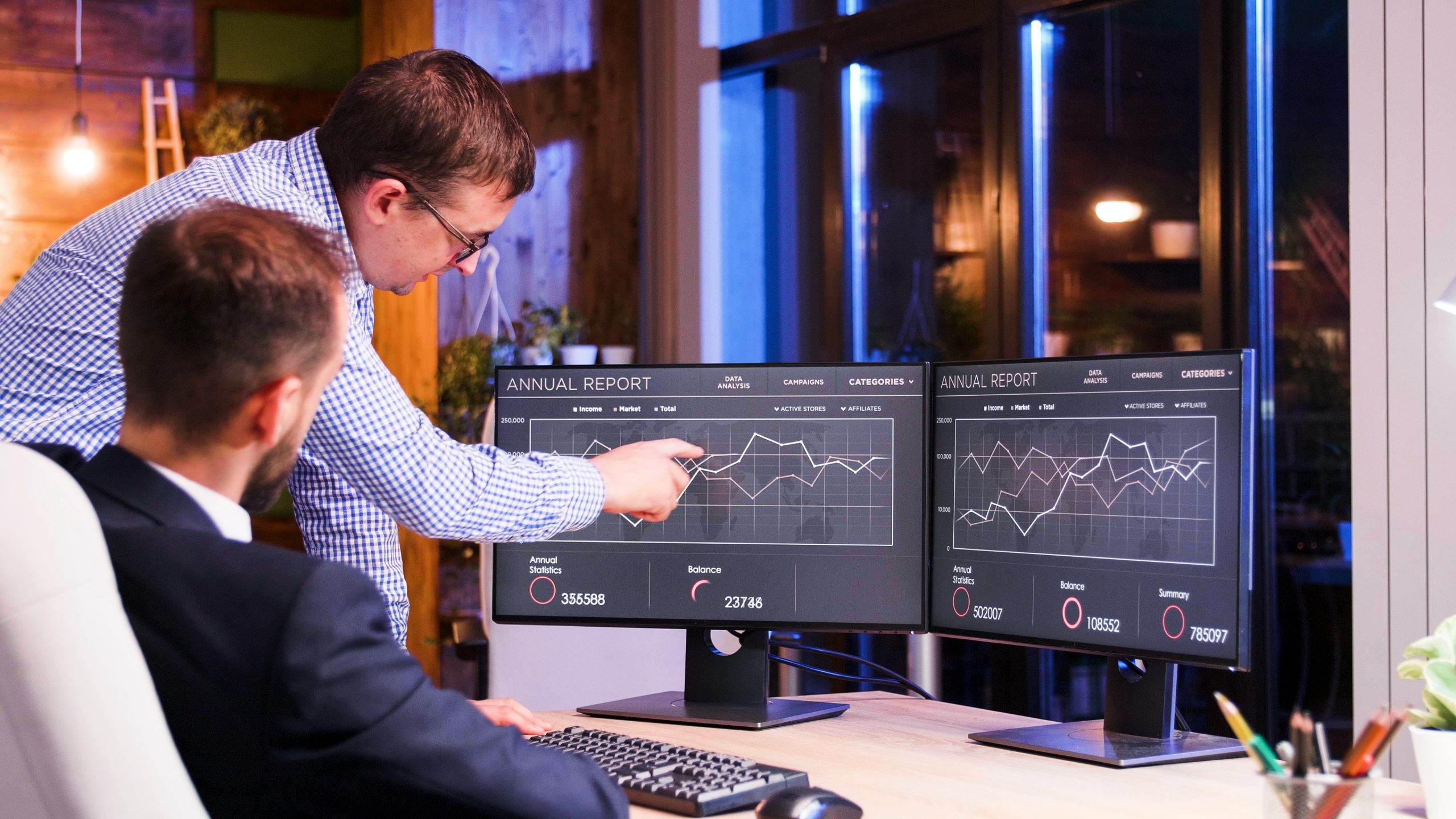
All five pillars above converge into one capability: the CEO Command Centre, a single, real-time dashboard that gives the head of a multi-plant Indian manufacturing business a complete operational picture of every location, from any device, at any time.
This is not a fantasy or a technology reserved for large conglomerates. In 2026, custom CEO dashboards for multi-plant Indian manufacturers are being built and deployed by software companies at investment levels that are accessible to growing mid-sized businesses. The result is a fundamentally different management experience, one where the CEO’s Monday morning question (“How did all our plants perform last week?”) gets answered in seconds, not hours.
Production vs plan , by plant · OEE comparison : Plant A vs B vs C · Live inventory levels at every location · Quality rejection rate · cross-plant ranking · On-time dispatch rate, by plant and customer · Machine downtime alerts from any plant, in real time · Inter-plant transfer requirements automatically flagged · Cost per unit, by plant and product
When an Indian manufacturing CEO has real-time visibility across all plants, the nature of their leadership changes. They stop reacting to problems that are already 24 hours old and start spotting patterns before they become crises. The Monday morning meeting shifts from a damage report to a strategic planning session. That is what true multi-plant visibility enables.
Your 5-Step Roadmap to Multi-Plant Visibility
Building cross-plant visibility does not happen overnight. But with the right approach, most Indian manufacturers can go from information islands to a connected operational picture within 90 to 120 days. Here is the sequence that works:
Audit Your Current Information Flows (Week 1–2)
Map exactly how production, quality, inventory, and financial data flows from each plant to HQ today. Where does it start? What format is it in? How long does it take to arrive? How many people touch it along the way? This audit reveals your actual visibility gaps, and is the foundation for everything that follows.
Standardise Data Definitions Across Plants (Week 2–4)
Before connecting systems, align on definitions. What counts as “downtime”? How is “rejection” classified? What is the production reporting period – shift, day, week? Getting all plants to speak the same operational language is a crucial, often skipped step that determines whether a unified system is actually useful.
Connect Your Highest-Pain Plant First (Week 4–8)
Do not attempt a simultaneous rollout across all plants. Choose the single plant that causes the most management headaches, the one furthest away, the one with the most opaque reporting, the one with the most frequent surprises, and build your unified system there first. Success at one plant creates buy-in for the rest.
Roll Out Plant by Plant With a Consistent Playbook (Week 8–16)
Once your first plant is live and proving value, use the same implementation playbook for each subsequent location. The standardised data definitions from Step 2 make this significantly faster, each new plant connects to the same system rather than requiring a custom integration.
Build the CEO Dashboard and Review Cadence (Week 16–20)
Once all plants are connected, configure the CEO Command Centre. The single view that shows all plants’ KPIs side by side. Establish a daily 10-minute dashboard review routine. Within 30 days, most CEOs report that this habit replaces 80% of the ad hoc plant manager calls and status update requests that previously consumed their mornings.
India’s manufacturing sector recorded 8.1% growth in December 2025, driven by electronics (34.9%) and automotive (33.5%). South India alone is growing at 7.72% CAGR to 2031. The manufacturers who build multi-plant visibility infrastructure now are positioning themselves to capture this growth window. The ones who wait are building operational debt that compounds with every new plant they open.
We Build Multi-Plant Visibility Systems for Indian Manufacturers
Stall G161Ascent24 Technologies is a Coimbatore-based custom software company specialising in digital transformation for Indian manufacturing businesses. We understand multi-plant operations in India, the WhatsApp-driven reporting, the state-level compliance complexity, the raw material volatility, the pressure to scale without losing operational control.
At INTEC 2026 , Stall G161, we will demonstrate live multi-plant visibility platforms built specifically for Indian manufacturers, from two-plant SMEs in Tamil Nadu to five-plant operations spanning multiple states. Come with your current reporting structure. Leave with a roadmap to see everything, everywhere, in real time.
Visit Stall G161, INTEC 20264–8 June 2026 · CODISSIA Trade Fair Complex, Coimbatore, Tamil Nadu · Ascent24 Technologies to Showcase AI & Automation at INTEC 2026 Coimbatore — Stall G161